Showing posts with label birds. Show all posts

October 13, 2015

Hummingbirds, a cactus, and John Gould

Buffon's Plumeteer, now White-vented Plumeleteer, from John Gould's A Monograph of the Trochilidae or Humming Birds, Vol. II. "The figures are of the size of life." 
He was the son of a gardener. "Scanty education," says Wiki. John Gould was also a gardener himself (employed at Windsor in his teens), and a taxidermist, an ornithologist, an author, a publisher, an artist, and the first Curator and Preserver at the museum of the Zoological Society of London:
His identification of the birds now nicknamed "Darwin's finches" played a role in the inception of Darwin's theory of evolution by natural selection. Gould's work is referenced in Charles Darwin's book, On the Origin of Species.
A number of birds are named for him — check out the amazing Dot-eared Coquette (Lophornis gouldii). Gould collected birds in Australia and Tasmania, but didn't see much of the west. This killed me a little: 
Throughout his professional life Gould had a strong interest in hummingbirds. He accumulated a collection of 320 species, which he exhibited at the Great Exhibition of 1851. Despite his interest, Gould had never seen a live hummingbird. In May 1857 he travelled to the United States with his second son, Charles. He arrived in New York too early in the season to see hummingbirds in that city, but on 21 May 1857, in Bartram's Gardens in Philadelphia, he finally saw his first live one, a ruby-throated hummingbird. He then continued to Washington D.C. where he saw large numbers in the gardens of the Capitol. Gould attempted to return to England with live specimens, but, as he was not aware of the conditions necessary to keep them, they only lived for two months at most.[Quotes from Wiki.]
Poor creatures.

Gould never traveled to South America, so I imagine the plants in his illustrations were drawn from botanical collections. I wonder why he chose that cactus. (Echinopsis?) This species of plumeleteer is a forest bird, I think, though the print above looks like savanna or desert (one reason I bought a copy of it ages ago, at the Huntington). Unimaginable challenges for naturalists back in the day, and now anyone with a bit of tech can find information on DNA sequencing and dozens of photos and videos of the birds in habitat. We're lucky, and luckier still if we can see hummingbirds any time we look out the window.

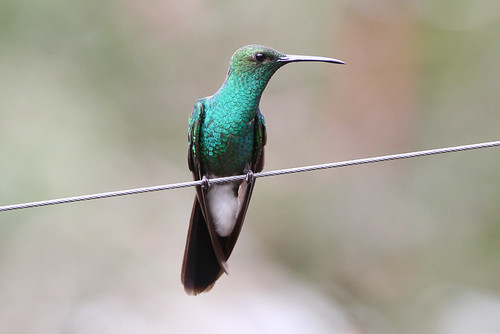
White-vented Plumeleteer (Chalybura buffonii)
White-vented Plumeleteer (Chalybura buffonii) photographed by Ron Knight in Colombia.
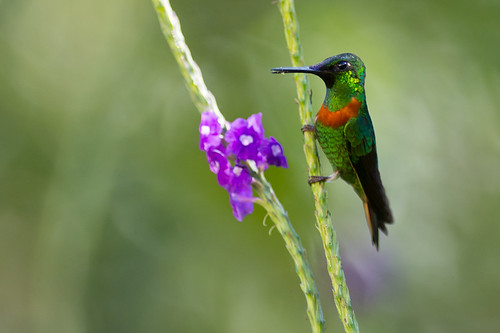
Heliodoxa aurescens
Gould's Jewelfront (Heliodoxa aurescens) photographed by Joao Quental in Perú.
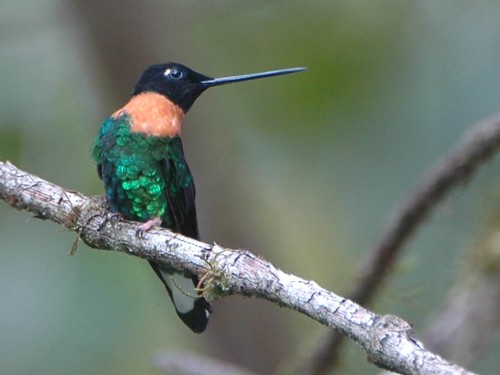
Gould's Inca humming bird, Machu Picchu, Peru
Gould's Inca (Coeligena inca) photographed by Phillip Edwards in
 Machu Picchu, Perú.

October 9, 2015

Botanical illustrations

Opuntia robusta et al by M.E. Eaton [Mary Emily Eaton]
(1873-1964).

This site (via the Opuntiads group on Facebook) is a real rabbit hole of a time sink. Three more by Eaton:


And down the rabbit hole we go:


Many of the prints are available in large resolutions. Have a favorite botanical (or zoological) illustrations site to share? I'd love to see it. Off to look at hummingbirds now:


July 14, 2015

Heartbreak Hotel

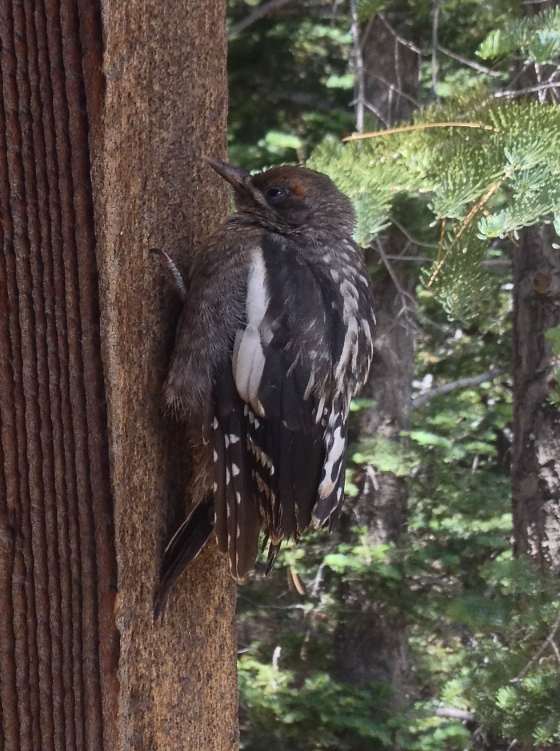
The fledgling.

This poor youngster landed on the cabin deck early last week. Parent birds keep an eye on fledglings like this one for some time after they leave the nest, bringing them food and doing what they can to help keep their offspring safe, but every so often there are extenuating circumstances (Fire Department to the Rescue! Happy ending!) and parents aren't around to help. This very young Red-breasted Sapsucker flew in at about nine in the morning, called for his family, preened a bit, pecked at the post, and looked tired. After a while he tucked his head under a wing and slept for a bit.

How I wish I'd offered him some food and water. But no, I was letting nature take her course [kicks self] and didn't want to frighten the parent birds, if they were nearby. They weren't. After several hours he launched away, fell to the ground, and died. 

I felt as if my heart would break, but a deceased fledgling can sometimes be a tiny bit of a deal, so like a good citizen scientist I placed the little guy's mortal remains in a baggie and put the baggie in a paper bag in the freezer. He'll go to legendary bird man Gene Cardiff at the San Bernardino County Museum. Mary Freeman, field trip leader for L.A. Audubon, was at the cabin on Saturday and wanted to take the fledgling to Kimball Garrett at the L.A. County Museum of Natural History, but I said no.  He's going to Gene. The fledgling will "play a vital role in advancing scientific knowledge," as the Smithsonian says. And his tag will always have my name on it, which is maybe the closest thing to immortality a provincial birder can hope for.

Side note: museum collections are awesome. They give me hope for humanity.

Local museums are usually happy to take bodies of wild critters of interest, provided said bodies are in good condition and have been frozen since the critter died. In other words, no mangled remains of something that has been lying on the road for a few days, ick. Unless it's an Archaeopteryx. Use common sense.

And finally, this was a new yard bird for me at the cabin. Such a sad way to add to the yard bird list, but at least it wasn't as bad as watching your life Mountain Quail being killed by a rattlesnake :~(

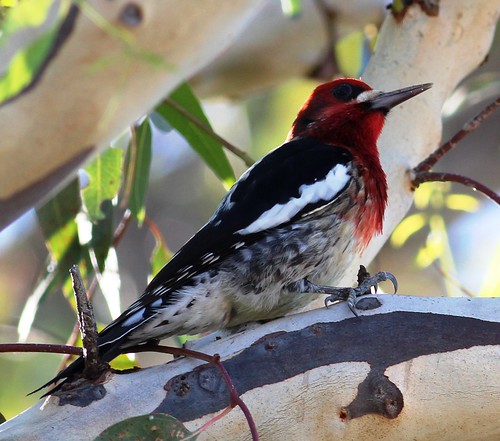
Here's a grown Red-breasted SapSucker, photographed by terrific local birder Tom Benson. I tell myself that the little one's spirit is having a great time flying around bird heaven.

Red-breasted Sapsucker


June 20, 2015

Lake Fire

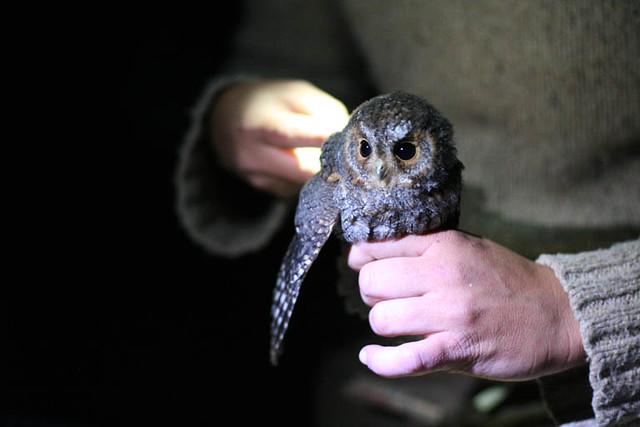
Untitled

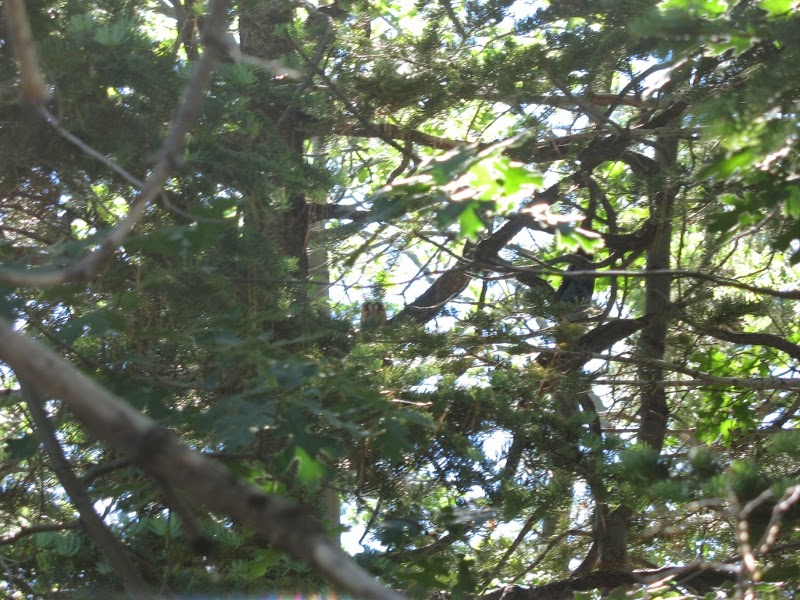
Four years ago at about this time (almost midnight) I was driving back to Big Bear Lake after a night spent owling near Fish Creek, in the San Gorgonio Wilderness area of the San Bernardino National Forest. My fellow birders and I were hoping to see (or hear, more likely) a Flammulated Owl. That's a grown one in the photo above. So small! After prowling the forest roads for a while, we finally heard our owl calling in the old-growth conifers at Mission Springs. It was pitch dark — a wonderful night.

This owling trip has been on my mind the last couple days, because the whole area — the meadow I photographed on the drive in; the forest we traveled through; Aspen Grove trailhead (Violet-green Swallows, Dusky Flycatcher, Green-tailed Towhee...); Fish Creek (Western Tanager, White-headed Woodpecker, Mountain Chickadees, Common Poorwill...); Mission Springs, where we finally heard the little Flamm — all of it is on fire, burned, burning, gone up in smoke, gone up in flames. The Lake Fire ("Incident Description: Moderate Rate Of Spread With Active Torching And Crown Fire Runs") was 16,000 acres in size at last count, and just 15% contained. 

I have a cabin in the San Bernardino National Forest, and fires like this scare the crap out of me. I hope firefighters will stay safe. I hope cabins don't burn. My heart aches for the nestlings too young to fly, the mule deer fawns, the bear cubs. There is no good time for a forest fire, but a big fire at this time of year seems especially cruel. I hope as many of the forest dwellers as possible make it through safely.  

Wildhorse Creek and Wildhorse Meadows to the north, Hell For Sure Canyon to the south. We are not in New England. Aspen Grove, Fish Creek, and Mission Springs, where we heard the little owl, have all burned. Here's the InciWeb link again, and #LakeFire on Twitter.


May 18, 2015

Random: weather, garden, Gates sale

In the garden: Agave potatorum verschaffeltii with Lotus hybrid Parrot's Beak.

Unusual weather for May: foggy, cool, black skies this afternoon and misting a bit. More rain expected later this week! I'll take it. Down to the low 50s F this evening, humidity 92%. El Niño on the horizon? Maybe. I'm holding good thoughts — though for the most part my thoughts these days are caught up in the usual May/June maelstrom of students, school activities, finals, and other year-end concerns, oy.

Some photos:

More rain! The Gates Cactus & Succulent Society Annual Show and Sale was May 15-16 . It rained the first day. I drove over after work and spent a quick hour plant shopping. For super coverage of the show on Saturday, see Reuben's post over at Rancho Reubidoux.)


Agave horrida at the sale.


These were just a few of many tables, and many shoppers, at the sale. In the white tent, judges were making their final decisions...


Love these little guys. Someday, maybe...


My haul. A new type of Agave titanota, there in the middle. And at lower left in the small box, my find o' the day: Agave x arizonica, a beautiful hybrid between A. chrysantha × A. toumeyana v. bella.


Senecio radicans near and far.


Filling up. The pot in the background holds [you'll have to trust me on this] a new Rosa banksiae 'Lutea.'


Parrot's Beak.


Opuntia azurea.


Why I teach, reason the infinity. Reptile Whisperer C rescued this lovely alligator lizard from the Boys PE locker room — we turned her loose in the orange grove next door. I'm the bring-to person for lizards, snakes, spiders, frog skeletons, photos of dead birds... all the interesting stuff :~)


April 26, 2015

Rainy, beautiful weekend

Must buy more pots! Story of my life. Agave gypsophila (with two pups not shown) and Aloe elgonica (five pups in the box) resting up before repotting.

It was a perfectly beautiful Sunday, after an overcast Saturday and a stormy Saturday night. Everything bright and glittering, dozens of hummingbirds, blue sky, white cloudlets. At some point I remembered that the Huntington Spring Plant Sale was this weekend, and it's a measure of just how perfect the day was, that I thought, "Oh, darn! Eh, whatever." Such a nice day.

There are two Giant Swallowtail chrysalides in the plastic box -- one is hanging on the side closest to the camera. Wake up, little dudes, it's spring!


Above the retaining wall. Most of the rocks in this photo have been in the family for the better part of a century. What can I say — we like rocks.

There were four of them at the feeder when I picked up the camera. Wasn't fast enough to get all of them, darn it. Major hummingbird activity this morning.

And finally, a video of my dog helping in the garden. No, really — he helps. Who's a good boy? You are, Jasper, yes, you!! Here's Jaspie helping his flu/cold/bronchitis-stricken human clean up her act, with cameo appearances by Smoky and Lulu. Good dogs all.


February 13, 2015

Flickr Friday: East Bay Wilds Native Plant Nursery


Photo by pete veilleux on Flickr.

This beautiful garden is so not mine. I love native plants and do try to use California natives in the yard, though, agave and succulent love notwithstanding. I have a little native oak; ceanothus; yucca and opuntias native to the foothills where I live; salvias, sage, a toyon... (Doesn't hurt that the Rancho Santa Ana Botanic Garden is just 45 minutes away.)  This article does an excellent job of describing just how important natives are
Landscape ecologists estimate that only 3 to 5 percent of the lower 48 states is undisturbed habitat for plants and animals. Farmland now covers more than half of the country. Most of the rest is taken up by suburban sprawl and about 40 million acres of lawns (“eight New Jerseys,” as Mr. Tallamy put it), along with highways, malls and growing cities. A world with half those lawns, he said, might have 20 million acres of habitat, or more than 13 national parks, including Yellowstone, Yosemite and the Adirondacks, if you added up the acreage.
Instead, thanks to vanishing habitats, Mr. Tallamy said, “We have 50 percent fewer birds than 40 years ago,” referring to results of yearly bird-banding studies that track those numbers. And some 230 species of North American birds are at risk of extinction, he added, citing the 2014 State of the Birds Report.
“But we can do something about this,” he said. “We can bring nature back to our yards.”

Amen, brother. And it's an easy call when native plants are this beautiful.


January 29, 2015

Anna's Hummingbird


Portrait by Brad Schram, who wrote the book on birding in Southern California [no, really, he wrote the book]. Brad is playing (his word) with settings and a new camera body here.

If you ever get the chance to hear Sheri Williamson talk about hummingbirds, give a listen. Not just because she wrote the book on hummingbirds (again, really), but because she's an excellent speaker, and because hummingbirds are awesome. Prodigious migrators, brainy as crows and parrots, masters of flight, and more beautiful than jewels, as you can see from Brad's photo. 

The Anna's is our most common hummingbird here in the foothills — in fact, I've only seen one other species in my yard this past year: a selasphorus, last summer. OK, a Rufous. Maybe. Though it might have been an Allen's:
In some areas, Garrett says, resident Allen's are now as familiar as the Anna's hummingbird, Southern California's most common.
"They're moving inland," Williamson says. "It probably has to do with gardens. It's evolution in action ... the evolution of an urban hummingbird. They're learning to live with people in new environments." [Link]
Sheri's blog is invaluable for anyone interested in feeding these little guys. I am shocked, shocked, to learn that there are chemicals in organic sugar...!

Here are a few photos of hummingbirds taken with an old iPhone, through windows, with way too much zoom, by someone whose hands aren't always steady, etc.

Four Anna's Hummingbirds at one feeder:


Keeping an eye on another feeder. The dead manzanita branches were schlepped down from the cabin: 


Shadow play: 


And finally, a handsome boy guarding yet another feeder. He's perched on an agave spine:


(Agave + needlessly ginormous pot = epic fail. Look, a hummingbird!)


January 13, 2015

After the rain


Caesalpinia pulcherrima. Blue stucco [swoons]. My new favorite photo, by Darin on Flickr.

Oh my god, the colors in that photo. Nothing to do with our rain, but had to share it. I have two Caesalpinia gilliesii, also beautiful, that had flowers last summer and are bare as could be right now. Dormant, not dead, I hope. Another photo by Darin:


Toumeyana bella, by Darin on Flickr.

I picked up an Agave toumeyana bella at the UC Riverside Botanic Gardens Fall Plant Sale in November. The online plant lists don't include smaller succulents, so I was incredibly happy to find an Agave toumeyana bella, a variegated Agave isthmensis, and an Aloe erinacea sitting next to each other on the same table. How cool was that? The aloe was too rich for my blood, but I brought the others home. Here's the isthmensis after Saturday's nice rain:


And here are a few more rainy shots. First, an Agave 'Kissho Kan' (still showing some hail damage from earlier in the year). Found this little guy at a nursery in Pasadena. He was buried in leaf litter in an unmarked, disintegrating plastic pot, so I got him for cheap. Burkard's, we hardly knew ye :~(


Echeveria nodulosa, from fave nursery Gloria's, in Riverside:


And Ceanothus 'Dark Star' (with rosemary and a wee santolina). Rode out the snowstorm like a boss -- yay for natives (though 'Dark Star' has a rep for not lasting long. We'll see):


Birdy: The colors on backyard birds may mean more than we think. Backyard Birds at Chickadee Gardens. What is it about hummingbirds? Birder/naturalist/author/artist Julie Zickefoose on The Best Thing I've Ever Bought, and on Plants, Resilient Plants. Wait, no birds in that last link. But oh, that hibiscus...! And Chet. And an agave :~)


January 7, 2015

Birder finds an owl -- you won't believe what happens next!

Long-eared Owl, with Steller's Jay butt just right of center. Heard the jays going crazy, ran outside, spotted the owl, ran back inside for the camera, shot into the sun right before the owl flew away, and the rest is internet history. Photo's from 2011 -- click to embiggen.

BuzzFeed, baby. The snapshot's on BuzzFeed. Will share a favorite bird photo to make up for this, I promise. 

Cropped, as shown on Twitter's #WorstBirdPic:

For documentation, OK?

And now, to make up for all that, here's a favorite photo, a great photo, that deserves all the attention it gets. Fiery-throated Hummingbirds in Flight, by Raymond Barlow. Follow the link! You'll never guess how beautiful his photographs are. Seriously.


[Edited to add: California Audubon took us to Storify! And now we're on The Dodo! My bad!]

January 2, 2015

New Year's Eve

Looking west, on the way to Oak Glen Road. (That's my sister's Subaru.) Dear people driving to Oak Glen: it is winter. And the invisible stuff that makes your SUVs slide and slide and slide even though you are standing on the brake is called ice, and it's all over the road even though you can't see it, and that is why the sign you passed a while back says, "Chains Required Beyond This Point." Oy.

It started snowing Tuesday night, and I thought we'd only get a dusting, but we wound up with half a foot. A veritable snowstorm! It was beautiful, and so cold, you can scarcely imagine. I'm afraid I may have lost a few succulents. There are still little patches of snow in my back yard. (We are a strong people — we will rebuild.) I went out Wednesday morning and cleaned as much snow off the bird feeders as I could, and the little guys (and big guys, the scrub jays) bellied up to the feeders in droves. I count 'em all for science. New yard bird (on the ground): a Lincoln's Sparrow.

Lincoln's Sparrow by Kelly Colgan Azar on Flickr.


Chaparral and palm trees.

December 16, 2014

Evening Grosbeaks in Big Bear

Merriam-Webster: "part translation of French grosbec, from gros thick + bec beak."
As always, click to embiggen.

I HAVE NEVER SEEN ONE. They better stick around for a while, is all I can say. Lance Benner recorded their flight calls last week: check out his recording on Xeno-canto. At last report there were 20 - 25 of them continuing south and west of the Big Bear Lake City Hall/Civic Center. Look up in the treetops. Did I mention that bears are occasionally spotted along Metcalf Creek? Anyhow, it's beautiful country — and now that the ski resorts are open, traffic will be nuts. Drive safe.

Photo by Cephas: Source

May 20, 2012

Chez Robin


As Crush says, "Little dudes are just eggs, leave 'em on the beach to hatch, then coo-coo-ca-choo, they find their way back to the big 'ol blue."

Via the most excellent Fawnskin Flyer.

August 13, 2011

Incoming: Eurasian Eagle-owl


Feather trivia, because I was reminded of it while watching this owl fly in and prepare to land, or make landfall: as you all know, flight feathers are called remiges [singular remex] from the Latin for oarsman; tail feathers are called rectices [singular rectrix], from the Latin for rudder or helmsman.

The Eagle Owl in the video is a cousin of our North American Great Horned Owl — they are both eagle-owls, members of the genus Bubo. More eagle-owls!

Same vid with a few extra seconds added.

Speaking of owls: I saw a Long-eared Owl near Big Bear Lake last month — rather a rare sighting, lucky me. Horrid photos here.


July 8, 2011

Suet craftiness. Also: Flickr Friday


For those of you who put out some version of suet or Zick Dough or Bark Butter for the birds, and are too broke and/or too cheap to shell out $$ for a feeder, well... walla, as we say here in California.

Step #1. Find a gnarly old piece of wood. The more canyons and craters, the better.

Step #2. Scrounge around in the garage or the pantry or wherever you keep little containers of small, used and useful items until you find an old screw eye.

Step #3. Put screw eye into one end of the wood. Fill canyons and craters with your preferred suet mix. Hang the thing in a tree. Done!

Took my gang here at the cabin about ten minutes to discover the new food source. Now it's popular with nuthatches, chickadees, grosbeaks, jays, woodpeckers, flickers... all the usual suspects.

*************

If you are in Big Bear this weekend for the PaddleFest or the Corvettes West Big Bear Bash or just to escape the down-the-hill heat for a few days, swing by the Discovery Center on the north shore and check out the swallow nests. (Great [dog-friendly] gift shop, too.)

There are nest boxes scattered here and there, and a few nests in trees like this defunct juniper:


Going in...

And coming out. Yep, a Violet-green Swallow ;~)

Here's a much, much better photo of a gorgeous Violet-green by Donald Metzner on Flickr.  He writes, "When this guy turned and the sun came out from behind the cloud, it was like he just lit up, amazing colors[...]" And those wonderful long wings. A beautiful bird:


See more of Donald Metzner's terrific photos here, at Flickr. Also on Flickr, Larry Jordan of the most excellent Birder's Report has a series of photos of an adult Violet-green feeding a nestling. See Larry's post on the Violet-green's cousin the Tree Swallow here, with wonderful photos.

July 7, 2011

Great and Gray

Found a beautiful video by Sparky Stensaas of my favorite owl, the Great Gray. Saw one hunting at dusk in Yosemite National Park while I was birding with Gene Cardiff and a group from SoCal, years ago. Just as I looked through the scope, the owl raised his head and looked straight at me. I felt some of what Mole experienced during his encounter with the Piper at the Gates of Dawn: "it was an awe that smote and held him [and] he knew it could only mean that some august Presence was very, very near." This will give you an idea:


Saw that Great Gray Owl — my first — in a meadow near Crane Flat, and another hunting in a different meadow the following morning. Unforgettable.

Found this video via Birdchick on Facebook, after she linked to the latest cool vid on Sparky's excellent blog: baby Brown Thrasher versus baby Garter Snake.

Related snake/bird post:
Killing at Arrastre Creek

July 5, 2011

Evening linkage

To the left is one of a series of alternate, for-promo-only posters for The Black Swan, created by design group LaBoca. See all of them at Scott Hansen's site.

The Zen Birdfeeder has a post on Juvenile Purple Finches and their antics, which reminds me of these photos of a good finch dad, taken here at the cabin last year by an L.A. Audubon member. Sweet ;~)

Loons and lead: read it and weep. Then surf over to Phillip Loughlin's The Hog Blog, and read a thoughtful hunter's commentary on this issue.

"We had another bird that went almost down to I-15 in the San Gabriel Mountains." That's an hour away from me [faints]. My sis, who lives up in San Jose, was the first to send me this news about wide-ranging California Condors. [Devastated by lead ammunition, the condor.]

Bryan D. Hughes's site Fieldherper.com has a gorgeous shot of a Black-tailed Rattlesnake in New Mexico's Guadalupe Mountains.

The Reptile Rescue Squad: Ashwin Baindur's daughter Aditi chronicles the rescue of a Russell's Viper, one of the most dangerous snakes in India.

Speaking of which: in The Truth About the Speckled Band, legendary venomous-snake authority [and Baker Street Irregular] Laurence Klauber reveals the identity of the... creature that killed Julia Stoner and Dr. Grimesby Roylott of Stoke Moran [shudders]. It wasn't a Russell's Viper, people.

More science news: Scientific American introduces its new blog network, with a stable of impressive bloggers [and Bora Zivkovic as Blog Editor, which bodes well]. For science geeks [like me] who love science blogs, this is very cool news. No such thing as too many outstanding science blogs these days, as far as I'm concerned.